
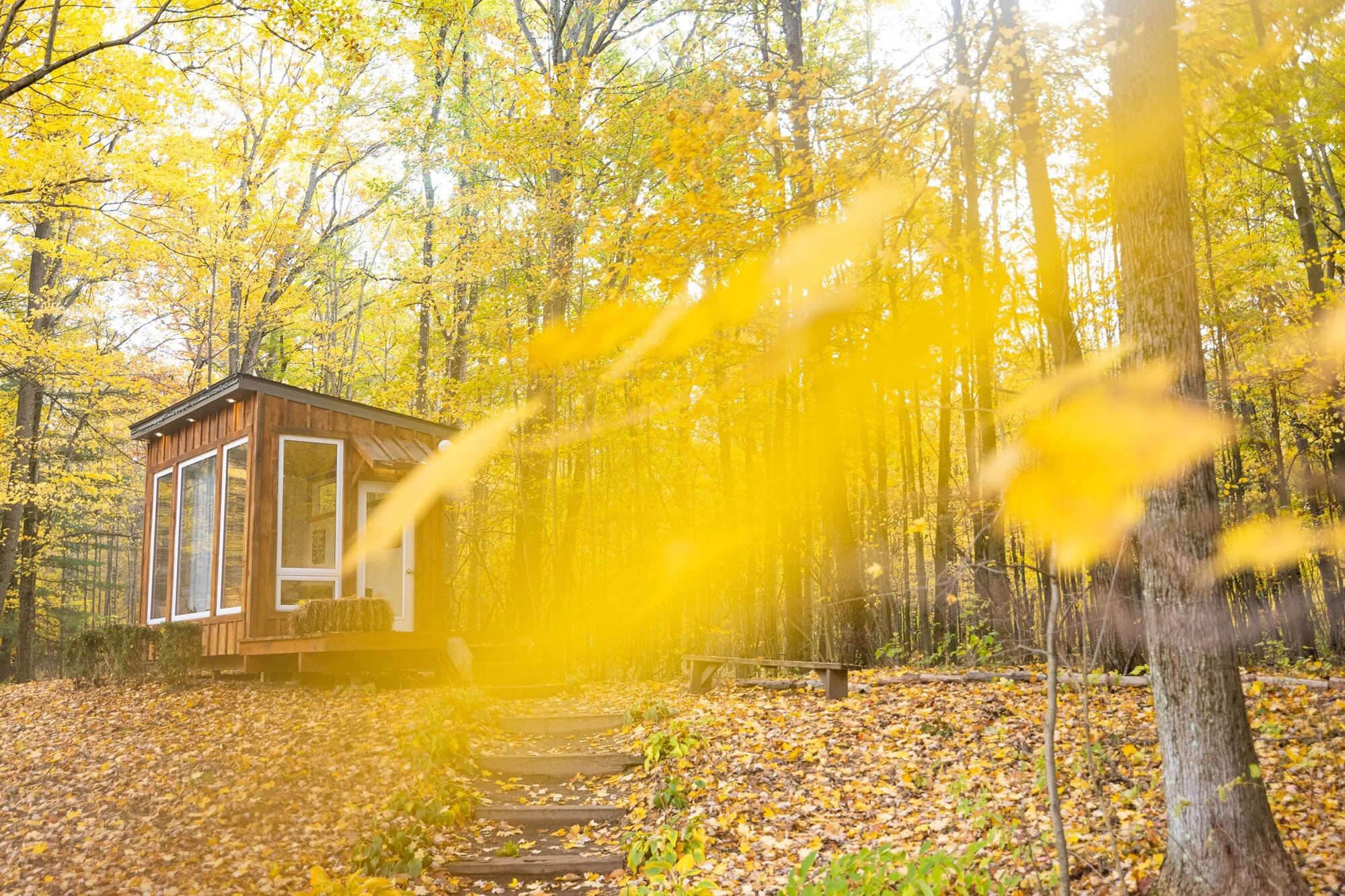
Fernwood Hills started as 40 acres of raw forest near London, Ontario. No brand, no platform, no systems. Today it's a fully operational hospitality business with a 1,000+ page booking platform, AI-powered guest communication, 28 automated workflows, and a multi-machine AI fleet running 24/7.
I built all of it. The brand identity, the photography, the website, the AI systems, the content pipeline — every piece. This post breaks down how AI became the backbone of the operation.
The Problem
Running a hospitality business as a small team means doing everything: guest communication, booking management, content creation, maintenance scheduling, marketing. The volume of repetitive work was unsustainable.
I didn't hire a team. I built one — with AI.
The AI Stack
The system runs across four machines, each with a specific role:
- Mac Mini (Hub) — orchestrator running agent frameworks, monitoring, and routing
- GPU Workstation — runs local LLMs for content generation and guest communication
- Ops Machine — handles streaming infrastructure and the Brain API (RAG system with property knowledge)
- MacBook Air — development machine for the Next.js platform
What the AI Actually Does
This isn't theoretical. These systems handle real operations every day:
- Guest Communication — AI drafts responses to guest inquiries using RAG (retrieval-augmented generation) with 267 chunks of property knowledge. It knows the property, the policies, the local area.
- Content Pipeline — automated image processing, social media content generation, and scheduling
- 28 Cron Jobs — automated workflows handling everything from booking confirmations to maintenance reminders
- Wildlife Detection — YOLO-based computer vision on live camera feeds, identifying animals and announcing sightings to YouTube streams
The Brand Side
AI handles the operations, but the brand was built the old-fashioned way — creative direction, photography, and positioning. Every photo on the site is mine. The visual identity, the tone, the content strategy — that's the creative direction side of what I do.
The combination is what makes it work. Brand vision sets the direction. AI systems execute at scale.
What I Learned
- Start with the problem, not the technology. Every AI system I built solved a specific pain point — not a hypothetical one.
- Local AI is underrated. Running models on your own hardware means zero API costs, full control, and no vendor lock-in.
- Automation compounds. Each workflow I automated freed up time to build the next one. The system gets more powerful over time.
- Brand still matters most. AI can't replace taste, vision, or creative direction. It multiplies whatever you feed it — so feed it something good.
Building Fernwood taught me how much honest, consistent imagery matters. If your business needs photographs that feel like the real thing — tell me what you're building.
Curious about the systems behind Fernwood Hills? See more of what I'm building.
Stay in the loop
Get occasional updates on AI, brand building, and creative work.